

How does a Bailey Bridge perform in high - altitude conditions?
Nov 12, 2025
Leave a message
How does a Bailey Bridge perform in high - altitude conditions?
As a supplier of Bailey Bridges, I've often been asked about the performance of these remarkable structures in high - altitude conditions. High - altitude areas present a unique set of challenges, from extreme weather to low oxygen levels and difficult terrain. Understanding how a Bailey Bridge copes with these conditions is crucial for anyone considering its use in such environments.
Structural Integrity in Low Atmospheric Pressure
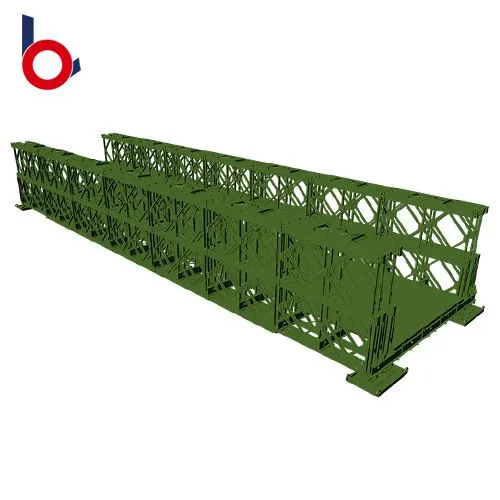
One of the most significant factors in high - altitude areas is the low atmospheric pressure. At higher elevations, the air is thinner, which can potentially affect the performance of materials used in bridge construction. However, Bailey Bridges are designed with a high degree of structural integrity. The modular design of Bailey Bridges, consisting of pre - fabricated steel panels and trusses, allows for a robust and stable structure.
The steel used in Bailey Bridges has high strength - to - weight ratios, which means it can withstand the forces acting on the bridge without being overly heavy. The low atmospheric pressure does not significantly impact the mechanical properties of the steel. In fact, the reduced air density can even have a minor positive effect on the bridge's aerodynamics, reducing wind resistance to some extent.
Resistance to Extreme Temperatures
High - altitude regions are known for their extreme temperature variations. During the day, the sun can heat the bridge surface to high temperatures, while at night, the temperature can drop significantly, sometimes below freezing. Bailey Bridges are engineered to handle these temperature fluctuations.
The steel components of the bridge have a relatively high coefficient of thermal expansion. This means that as the temperature changes, the bridge can expand and contract without causing significant stress on the structure. Additionally, the modular design allows for some flexibility in the joints between the panels, which further helps to accommodate these thermal movements.
Wind and Weather Resistance
High - altitude areas are often subject to strong winds and severe weather conditions, such as snowstorms and blizzards. Bailey Bridges are designed to withstand high - wind loads. The triangular truss design of the bridge provides excellent stability against lateral forces. The trusses distribute the wind load evenly across the structure, preventing any single point from bearing too much stress.
In terms of snow and ice, the open - lattice design of the Bailey Bridge does not allow for excessive snow accumulation. Snow can easily fall through the gaps in the structure, reducing the additional weight on the bridge. Moreover, the steel surface of the bridge is less likely to retain ice compared to other materials, which helps to maintain the bridge's integrity during winter months.
Adaptability to Difficult Terrain
High - altitude areas typically have challenging terrain, including steep slopes, rocky outcrops, and uneven ground. The modular nature of Bailey Bridges makes them highly adaptable to such conditions. The bridge can be easily assembled and adjusted on - site to fit the specific topography.
The individual panels can be connected in various configurations, allowing for the construction of bridges with different spans and angles. This flexibility enables the bridge to be installed across rivers, gorges, and other obstacles in high - altitude regions without the need for extensive ground preparation.
Case Studies of Bailey Bridges in High - Altitude Regions
There have been numerous successful installations of Bailey Bridges in high - altitude areas around the world. For example, in the Himalayas, Bailey Bridges have been used to provide vital transportation links for remote villages. These bridges have withstood the harsh weather conditions and difficult terrain, proving their reliability in high - altitude environments.
In the Andes Mountains, Bailey Bridges have been employed in infrastructure projects. They have been able to quickly and efficiently span large gaps, even in areas with limited access. The ease of installation and the ability to adapt to the local conditions have made Bailey Bridges a popular choice in these regions.
Comparison with Other Bridge Types
When compared to other bridge types, such as concrete or suspension bridges, Bailey Bridges offer several advantages in high - altitude conditions. Concrete bridges require a large amount of on - site pouring and curing, which can be challenging in cold and high - altitude environments. The curing process may be delayed due to low temperatures, and the concrete may be more prone to cracking.
Suspension bridges, on the other hand, are more complex to install and require a high level of technical expertise. They are also more sensitive to wind and seismic activity. Bailey Bridges, with their simple modular design, can be installed relatively quickly and easily, even in remote high - altitude locations.
The Role of Maintenance in High - Altitude Conditions
While Bailey Bridges are designed to be durable in high - altitude conditions, regular maintenance is still essential. The harsh environment can cause some wear and tear on the steel components over time. Corrosion can be a concern, especially in areas with high humidity or where the bridge is exposed to salt spray.

To prevent corrosion, the bridge should be inspected regularly for signs of rust and treated with appropriate coatings. The joints between the panels should also be checked to ensure they are tight and secure. Additionally, any debris or snow that accumulates on the bridge should be removed promptly to prevent additional stress on the structure.
Pedestrian Bridge Steel Structure
If you are considering a Bailey Bridge for a high - altitude project, you may also be interested in Pedestrian Bridge Steel Structure. Our steel structures can be customized to meet your specific needs, whether it's for a small pedestrian bridge or a larger vehicle - capable bridge.
Conclusion
In conclusion, Bailey Bridges perform exceptionally well in high - altitude conditions. Their modular design, structural integrity, and adaptability make them an ideal choice for bridging gaps in remote and challenging high - altitude areas. They can withstand extreme temperatures, strong winds, and difficult terrain, providing reliable transportation links where other bridge types may struggle.
If you are involved in a project in a high - altitude region and are considering a bridge solution, I encourage you to contact us for a detailed discussion. Our team of experts can provide you with more information on the design, installation, and maintenance of Bailey Bridges to ensure your project's success.
References
- "Bridge Engineering Handbook" by Wei - Li Dong
- "Structural Steel Design" by William T. Segui
- Various case studies from international infrastructure projects in high - altitude regions.