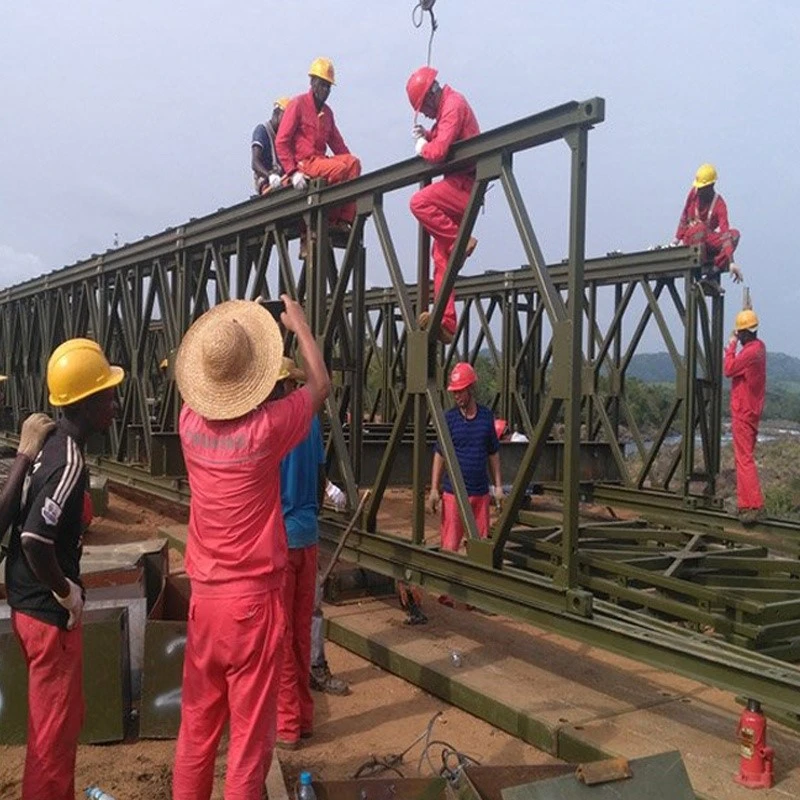

The bailey plate is a truss structure
Oct 30, 2026
Leave a message
The bailey plate is a truss structure with concentrated welding heat input, making deformation control equally important as ensuring adequate penetration.
Full-length continuous welding at critical locations: At all key load-bearing joints-such as member splices and connections between members and node plates-full-length continuous welding must be applied. Spot welding, intermittent welding, or incomplete welds are strictly prohibited. This ensures sufficient effective cross-sectional area for the weld to carry loads and prevents stress concentration.
Symmetrical and layered welding: To counteract welding-induced thermal deformation, double-operator symmetrical welding or segmented backward welding should be employed. For thicker plates, multi-pass layered welding is required, with each pass cleaned thoroughly before applying the next, ensuring good interpass fusion.
Dedicated fixtures for clamping: Components must be securely fixed on specialized welding jigs using locating pins and clamping devices to ensure the gap between chord members and node plates does not exceed 0.3 mm, thereby physically restricting welding deformation.
Consistent parameters: During welding, current, voltage, and travel speed must remain stable to avoid excessive heat input-which reduces base material toughness-or insufficient heat input-which results in inadequate penetration. Automated welding offers significant advantages in maintaining parameter consistency.